


If you’ve played guitar for more than five minutes, you’ve probably wondered: Strat or Les Paul? The truth is there’s no “winner,” just two brilliant design philosophies that shape feel, sound, and how you connect with your music. Here’s a deep, practical guide from our team at Colemans Music to help you choose confidently.
The big picture: two different design philosophies
-
Fender Stratocaster – Leo Fender’s modular, ergonomic workhorse. Bolt-on neck, contoured body, vibrato bridge, and bright, articulate single-coil tones. A platform that begs to be tweaked and modded.

PIC: https://guitar.com/
-
Gibson Les Paul – Set-neck, carved-top classic built for sustain, punch, and authority. Typically humbuckers into a fixed bridge for thick, singing tones and rock-solid tuning.

Both designs have evolved (there are HSS Strats, P-90 Les Pauls, coil-splits, active circuits, etc.), but their core identity remains.
Core specs at a glance (typical models)
| Feature | Stratocaster | Les Paul |
|---|---|---|
| Scale length | 25.5" (snappier, tighter feel) | 24.75" (slinkier, bend-friendly) |
| Neck joint | Bolt-on (clear attack, easy servicing) | Set neck (sustain, warmth) |
| Fingerboard radius | Often 9.5"–12" (modern models) | Often 12" |
| Frets | Usually 21–22 | Usually 22 |
| Pickups | Mostly single-coils (SSS), also HSS/HS | Mostly humbuckers (HH), also P-90 |
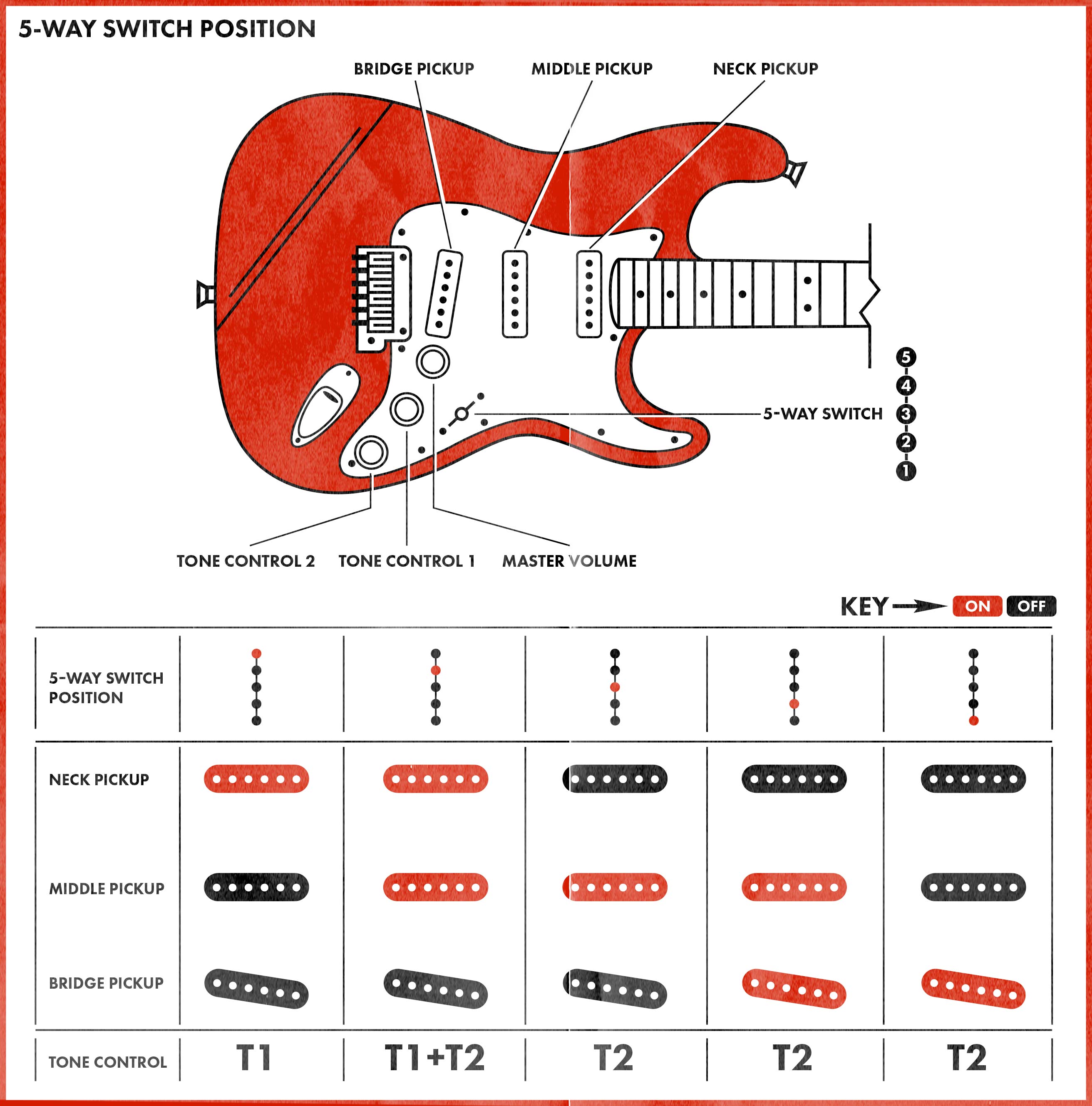
| Controls | 1 vol, 2 tone, 5-way switch (positions “2 & 4” quack) | 2 vols, 2 tones, 3-way switch (independent control per pickup) |
| Bridge | Synchronized vibrato/trem (often 2-point or vintage 6-screw) | Tune-o-matic + stopbar (fixed) |
| Typical body woods | Alder/ash | Mahogany with maple cap |
| Weight | Generally lighter | Generally heavier (many modern models use weight relief) |
Specs vary by series and year—always check the exact model you’re eyeing.
How they feel
-
Neck & fretting hand
Strat’s longer 25.5" scale adds string tension and snap; chords ring clear and single notes pop. Les Paul’s 24.75" scale feels a touch looser—bends are easy and vibrato feels buttery. Neck shapes vary widely on both (from vintage “chunky” to slim modern profiles). -
Body & ergonomics
Strat’s tummy and forearm contours hug the body; upper-fret access is excellent thanks to the scooped heel on many modern models. Les Paul’s carved top is comfortable and elegant, but the single cutaway and neck joint can feel a bit bulkier up high (many players love that solid, anchored feel). -
Weight & balance
Strats tend to be lighter and balanced on a strap. Les Pauls feel substantial; that mass contributes to sustain and girth.
How they sound
-
Pickups & electronics
-
Strat single-coils = bright, glassy, percussive. Positions 2 & 4 (parallel combinations) give the famous “quack.” 250k pots tame top-end for a rounded high.
-
-
Les Paul humbuckers = thick, warm, high-output with less noise. 500k pots keep things open and airy up top. Independent volume/tone per pickup lets you blend rhythm/lead textures from the toggle.'
-

-
-
Gain behaviour
-
Strats stay clear under light to medium gain and cut through mixes with ease.
-
Les Pauls love overdrive—saturated sustain, vocal mids, and singing leads. Roll the volume back and they clean up beautifully.
-
-
Noise
Traditional single-coils hum; humbuckers cancel noise. Many modern Strats use noiseless single-coils or stacked designs—worth auditioning if you play high-gain or under neon lights.
Bridges, tuning, and sustain
-
Strat vibrato (tremolo) gives expression (shimmer, gentle dips). Set up matters: a floating bridge offers movement but needs proper spring tension and nut/lubrication care. Decking/blocking the trem can increase stability and punch.
-
Les Paul fixed bridge is plug-and-play stable with strong sustain and straightforward intonation.

Genres & use-cases (not rules, just tendencies)
-
Strat strengths: funk, pop, indie, country, surf, blues, worship, anything needing chime, clarity, and rhythmic snap.

-
Les Paul strengths: rock, classic/hard rock, punk, metal, jazz, fusion—styles that want thick rhythm crunch and lyrical sustain.
Of course, players constantly break these “rules” (hi, Knopfler on a Les Paul; Gary Moore on a single-cut; humbucker Strats doing hard rock).
Modding & versatility
-
Strat: the ultimate mod platform—pickguards, loaded guards, HSS swaps, series/parallel switches, treble bleeds, locking tuners, different trems. Setup tweaks can nudge a Strat from vintage sparkle to modern muscle.
-
Les Paul: coil-splits/taps, wiring harness upgrades, magnet swaps, P-90 or Filter’Tron-style drops in some routes, locking bridges/tuners. You can keep the soul of a Les Paul and open new tonal doors.
Maintenance & serviceability
-
Strat: bolt-on simplicity; neck swaps or shim adjustments are easy.

-
Les Paul: set-neck etiquette—stable and resonant but best left to a tech for major surgery. Both love a good pro setup (nut slots, relief, action, intonation).
Budget to pro: where to start
-
Great value
-
Squier Stratocaster models deliver genuine Strat vibe on a budget (HSS options if you want humbucker punch).
-
Epiphone Les Paul models nail the feel and look with modern playability features.
-
-
Mid to high
-
Special runs & anniversaries
Limited editions (and signature models) add collectible finishes, pickups, and neck carves. If something grabs you, try it ASAP—runs can be short.
Prices, specs, and availability change—come chat with us and we’ll line up current options to suit your hands, ears, and budget.
Common questions we hear in-store
Which is better for beginners?
Whichever you’re excited to practice on. If weight worries you or you want a slimmer body, start with a Strat-style. If you love thick, sustaining tones and don’t need a trem, a Les Paul-style is perfect.
Which stays in tune better?
A well-set-up guitar of either type stays in tune. Fixed bridges are simpler; floating trems need careful setup and nut lubrication. Locking tuners help both.
Can a Strat do heavy rock/metal?
Yes—HSS Strats with a bridge humbucker are built for it. Even SSS Strats can rock hard with the right amp/pedals.
Can a Les Paul sound bright and clean?
Absolutely—use the middle position, roll volumes back, and set your amp clean. Coil-split models get even closer to single-coil sparkle.
Quick decision guide

Choose a Strat if you want:
-
Snappy attack, clean articulation, and “quack”
-
A comfy, contoured body and lighter weight
-
A trem for tasteful vibrato
-
A super-modifiable platform (HSS, wiring tricks)

Choose a Les Paul if you want:
-
Thick rhythm crunch and vocal sustain
-
Low-noise humbuckers and strong mids
-
Rock-solid fixed bridge feel
-
Classic single-cut vibe with authority
Come try them at Colemans Music
Nothing beats ten minutes on each through the same amp. We’ll set you up with comparable strings, action, and pickups so your hands and ears make the call. Bring a favourite pedal if you like—and a playlist of tones you love.


