


The guitar industry often focuses on the past, celebrating vintage specifications, traditional designs and instruments inspired by those built more than half a century ago. There is nothing wrong with this. Many classic guitars remain popular because they were exceptionally well designed.
But guitar making needs more than nostalgia to keep moving forward.
It also needs builders willing to ask why an instrument is constructed a certain way, whether established ideas can be improved and how modern knowledge can support traditional craftsmanship.
Aaron Fenech is one of those builders.
When we first spoke with Aaron, Fenech Guitars was still a relatively new name in the Australian market. Even then, what stood out was not simply that his guitars were made locally, but that Aaron had clear reasons behind the decisions he made.
The company has grown significantly since those early days, but that curiosity still sits at the centre of Fenech Guitars. That is why we believe Aaron Fenech matters to Australian guitar making.
Tim Burton talks to Aaron back in 2022.
An Unusual Path Into Guitar Building
Aaron did not take a conventional route into the guitar workshop. His background spans automotive refinishing, carpentry, scientific study and guitar repair, with each of these experiences contributing something important to his approach.
Automotive refinishing taught him the value of careful preparation, sanding and spraying before the final finish is applied. Carpentry gave him practical, hands-on experience working accurately with timber, while his scientific background introduced him to physics, mathematics, material behaviour and the dynamics of vibrating structures.
Guitar repair then exposed him to the long-term consequences of instrument design, including changing neck angles, lifting bridges and structural problems that can take years to appear.
Together, these skills help explain why Aaron considers not only how a guitar sounds when it leaves the workshop, but also how it responds to the player and how it may perform over decades of use.
 Curiosity Before Convention
One of the most interesting things about Aaron is his desire to understand what is actually happening inside a guitar.
What makes a soundboard responsive? How much structure is required to withstand string tension? How do the bridge, bridge plate, braces, body dimensions and enclosed air affect the final sound?
An acoustic guitar is a complete system, and changing one component can influence several others.
To navigate this, Aaron combines scientific measurement with active listening. Testing can reveal valuable information about stiffness, density, vibration and frequency response, but numbers alone cannot determine whether a guitar is truly musical.
The final judgement still comes down to experience, touch and hearing.
That balance is important. Aaron does not use science to remove instinct from guitar making. He uses it to better understand what his hands and ears are already telling him.
Tone, Strength and Individual Pieces of Timber
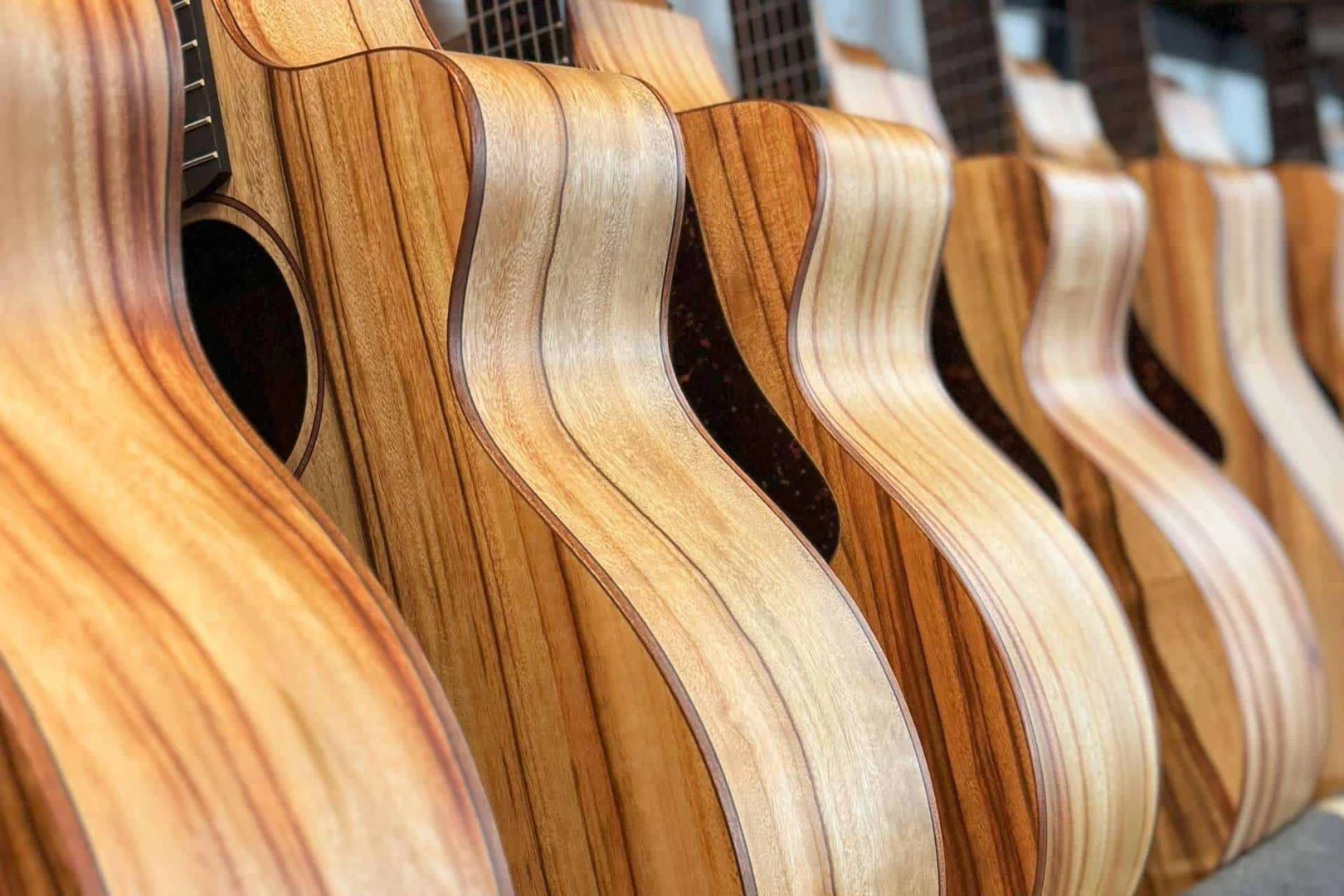
Every acoustic guitar builder faces the same fundamental challenge: the soundboard must be strong enough to withstand the constant pull of the strings, yet flexible enough to move freely and produce sound.
Build it too heavily and the guitar may feel restricted. Build it too lightly and it may sound lively initially but develop structural problems later.
Adding to this difficulty is the natural inconsistency of timber. Two pieces of spruce from the same species can behave differently, as can Australian blackwood, mahogany, rosewood and other tonewoods.
Rather than processing every top and back to one fixed measurement, Aaron assesses the materials individually. Thicknesses and bracing can be adjusted according to the specific behaviour of each piece of timber.
To us, this demonstrates what handmade guitar building should genuinely mean. It is not simply about a person operating the tools. It is about a builder responding thoughtfully to the material in front of them.
The Small Decisions Add Up
The guitar industry often searches for a single revolutionary feature to explain why an instrument is special.
In reality, the difference between a good guitar and a memorable one usually comes from a multitude of smaller decisions.
The selection of the soundboard, the shaping of the braces, the weight of the bridge, the neck angle, the thickness of the finish and the final setup can each contribute a small improvement. Together, however, they can have a substantial effect.
This is one of the most convincing aspects of Aaron’s philosophy. He understands that an instrument is the culmination of countless choices, including internal details that the eventual owner may never see.
Solving Problems Rather Than Repeating Them
Aaron’s experience repairing guitars has heavily influenced his approach to design.
Repair work highlights the problems that appear repeatedly and can reveal that some construction methods continue simply because they are traditional.
Fenech’s structural ideas, including the support around the neck and upper section of the guitar, reflect Aaron’s focus on long-term stability.
The challenge is to strengthen the areas that need support without unnecessarily restricting the sections responsible for producing sound.
Traditional methods should not simply be discarded. Many have survived because they work exceptionally well. But tradition should serve as the starting point, not the end of the discussion.
Australian Made Without Relying on the Label
There is genuine value in purchasing an Australian-made guitar.
It supports local skills, local employment and the continuation of instrument manufacturing in this country. It also gives players a closer connection to the people who designed and built their instruments.
However, “Australian made” should not be the only reason to buy a guitar. The instrument still needs to sound good, feel comfortable and suit the player.
Fenech Guitars uses Australian timbers such as blackwood, along with a range of less conventional local species. But the goal is not simply to use unusual materials for marketing appeal. The important question is whether those materials contribute something musically useful.
Aaron also recognises that players have established tonal reference points. Many of us grew up listening to American acoustic guitars made from spruce, mahogany and rosewood.
An Australian guitar does not need to reject those familiar sounds. It can draw inspiration from them while developing its own identity through local materials, original construction methods and a distinctive approach to voicing.
That gives Fenech a more meaningful Australian identity than simply recreating an established overseas design locally.

Building Instruments for Working Players
Another important part of the Fenech story is the desire to build serious guitars for working musicians.
There will always be a place for highly decorated, one-off Masterbuilt instruments that showcase exceptional craftsmanship, timber selection and personalisation.
However, a guitar company cannot contribute deeply to the wider playing community if its instruments remain entirely out of reach for most musicians.
Working players need reliable machine heads, quality nuts and saddles, stable construction, suitable electronics and a protective case. They should not need to immediately replace major components to make a new guitar suitable for professional use.
Aaron’s aim is to create an instrument that can become someone’s main guitar, rather than simply an object to admire.
Growing Without Losing the Original Idea
The greatest challenge for any successful boutique guitar company is managing growth.
A solo builder can personally control almost every stage of production, but increasing demand eventually makes that impossible. Scaling up requires more staff, improved systems and modern machinery, which creates the risk of losing the individual judgement that made the instruments special in the first place.
Modern technology, however, is not inherently the enemy of craftsmanship.
CNC equipment and computer modelling can improve accuracy, repeatability and consistency. The key is knowing where human judgement must remain.
A machine can cut a part with remarkable accuracy, but it cannot decide whether a particular piece of spruce feels right for a specific guitar. It cannot listen to the finished instrument and determine whether further adjustment is required.
The future of boutique guitar building lies in using technology to support skilled builders rather than replace them. That is a distinction Aaron clearly understands.
What We See at Colemans Music
At Colemans Music, we have watched Fenech grow from an emerging Australian manufacturer into a well-established Australian guitar maker.
The Australian-made story attracted early attention, but that alone would not have sustained the brand.
Ultimately, players judge guitars with their hands and ears. They notice the responsiveness of the instrument, the balance across the strings, the comfort of the neck and, most importantly, whether the guitar inspires them to keep playing.
Because no builder can create one instrument that suits everyone, guitar stores remain important.
A builder can explain the design, a website can list the specifications and a video can demonstrate the tone, but only by putting the guitar into someone’s hands can they truly decide whether it connects with them.
Our role is to help create that connection, allowing players to compare Fenech guitars directly with the other instruments they are considering.
Why Aaron Fenech Matters
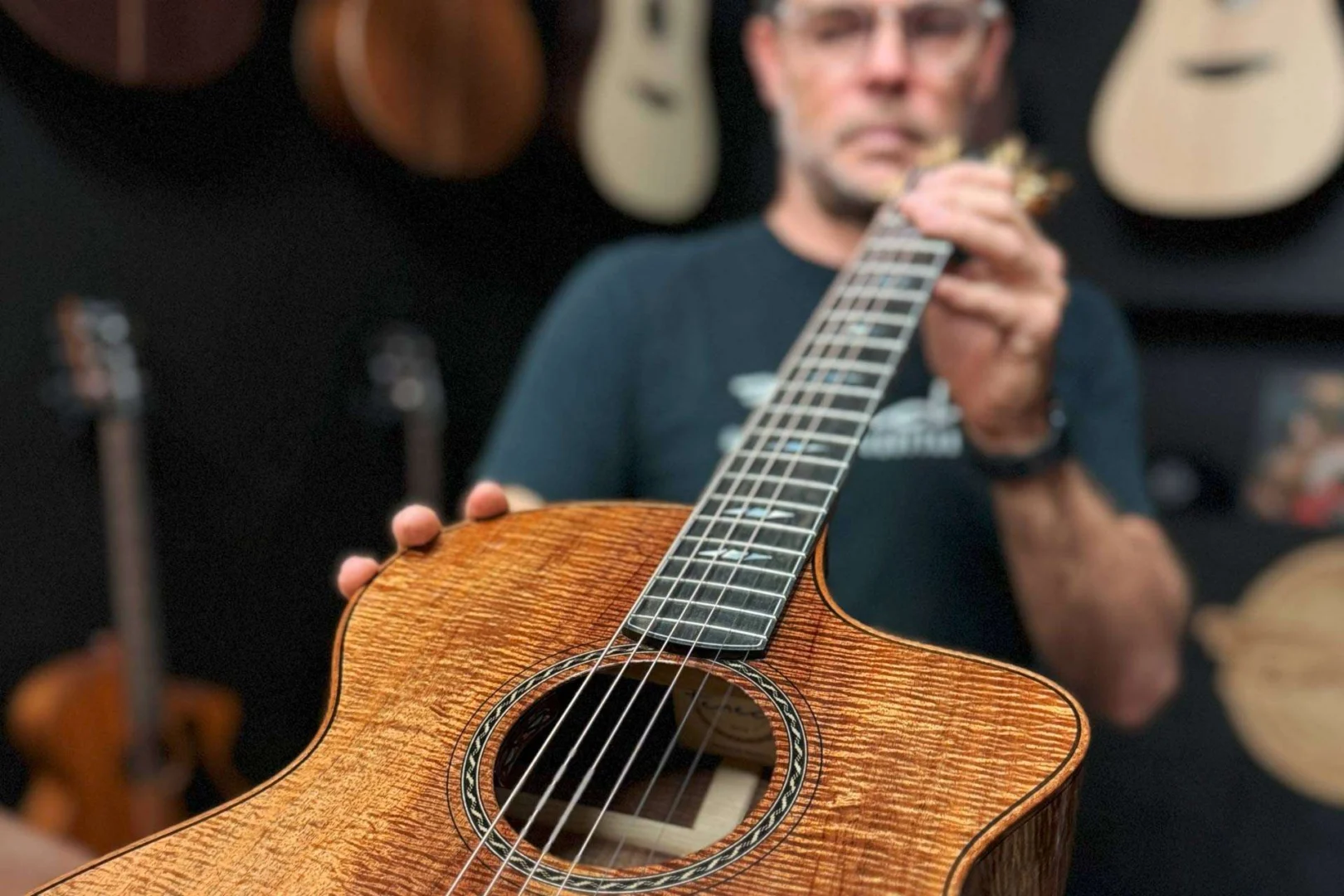
Aaron Fenech matters because he represents a confident, modern approach to Australian guitar making.
He respects the history of the acoustic guitar without being trapped by it. He uses scientific knowledge without reducing music to numbers and works with Australian timbers without relying on novelty.
He also uses modern technology without dismissing the importance of skilled hands.
Most importantly, he keeps asking questions.
Could this part be stronger? Could it be lighter? Could the guitar respond more freely? Can an Australian instrument develop its own identity while still feeling familiar to players?
The Australian guitar industry does not need more builders simply copying the past. It needs innovators who understand the past well enough to develop it.
That is why Aaron Fenech matters—not only to Fenech Guitars, but to the ongoing story of Australian guitar making.


